
Meanwhile, Rio de Janeiro (the “Wonderful City”) and Los Angeles (the “City of Angels”) are comparable as the second city of their respective countries, and both are beach[1] and mountain towns, famous for the practice of surfing (there are two major poles of surfing in Brazil, the states of Rio de Janeiro and Santa Catarina, and equally two in the United States, California and Hawaii) and for its artistic and cultural creation: Los Angeles is called the creative capital of the world (according to the USC Stevens Institute for Innovation, “there are more artists, writers, filmmakers, actors, dancers and musicians living and working in Los Angeles than in any other city at any time in the history of civilization” — see, for example, Hollywood), while Rio is the cultural capital of Brazil, also residence and place of work of most actors, musicians, filmmakers, cultural producers, as well as institutions related to culture and entertainment, such as Rede Globo (whose studios, the famous Projac, are a kind of Brazilian Hollywood), Rede Record and its RecNov studios (currently Estúdios Casablanca), Globo Filmes, the Brazilian Academy of Letters, some of the most important Brazilian museums, etc. (Incidentally, Brazilian TV soap operas have a global penetration comparable to that of American cinema.) However, the most famous monuments of the two countries, Christ the Redeemer and the Statue of Liberty, are in inverted locations: Rio vs. New York (that is a diagonal symmetry). Conversely, Brazil’s wealthiest state is São Paulo, and the richest of the USA is California, home to Los Angeles. By the way, the states of São Paulo, Rio de Janeiro, New York and California establish among themselves diagonal symmetry relations: California and São Paulo, the most important states of their respective federations, bring the contrast of a cosmopolitan metropolis and a countryside of rural culture (caipira [‘hick’] in São Paulo case, western in the Californian case); Rio de Janeiro and New York, each occupying the second place in importance in their respective countries, are small states, whose life is almost all concentrated in the great metropolis.
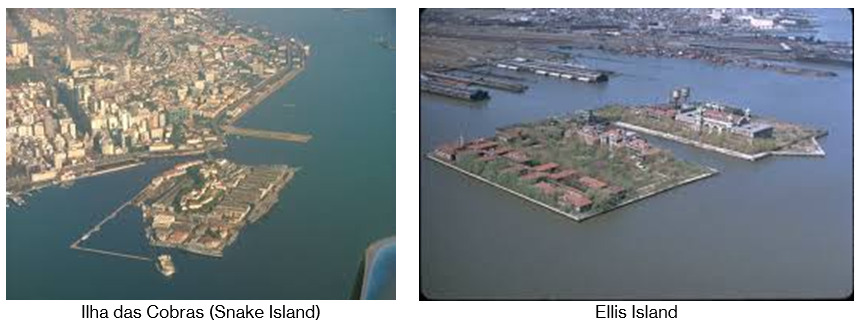
But there are other direct or cross-symmetries between these cities. Rio de Janeiro has the Governor’s Island, and New York, Governors Island, both located in bays — the Guanabara and Hudson Bay, respectively. And in these two bays we have two islands of rectangular shape and linked to the mainland by a breakwater. These are Ilha das Cobras (Snake Island) in Rio de Janeiro and Ellis Island in New York.
Furthermore, both Rio de Janeiro and New York were the second capitals of their countries.
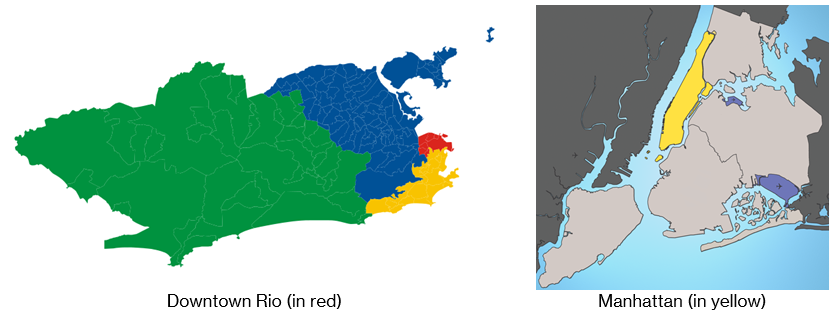
But just as New York is located on the border between the states of New York and New Jersey (and nearby Jersey City, across the Hudson Bay), the city of Rio was, until 1975, on the border with the state of Rio de Janeiro, and has the city of Niterói on the other side of Guanabara Bay. Interestingly, both downtown Rio and the borough of Manhattan, central New York, are located, not at the geographical centre of their municipalities, but at one end.
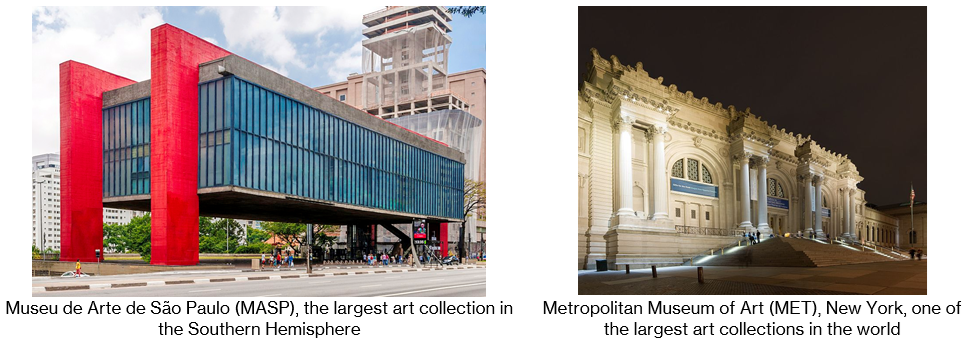
Let’s now see some photos of these four cities.
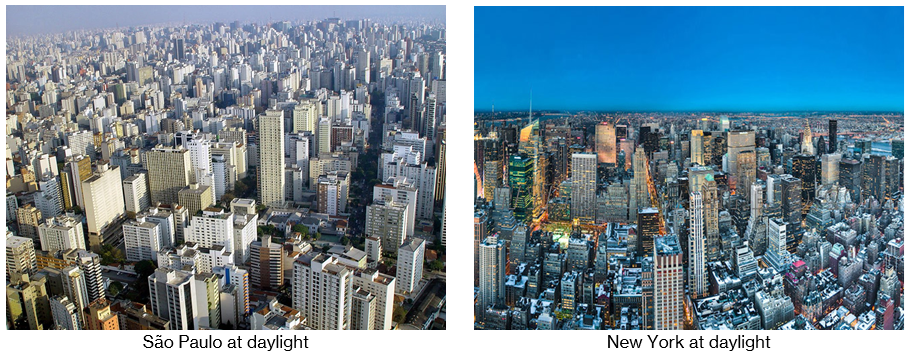
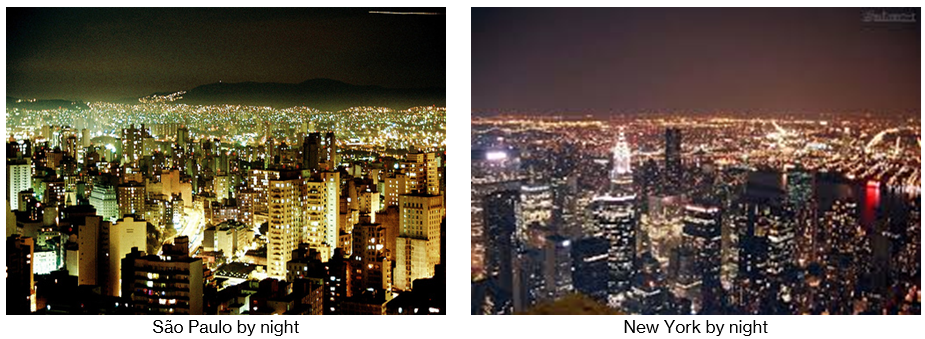
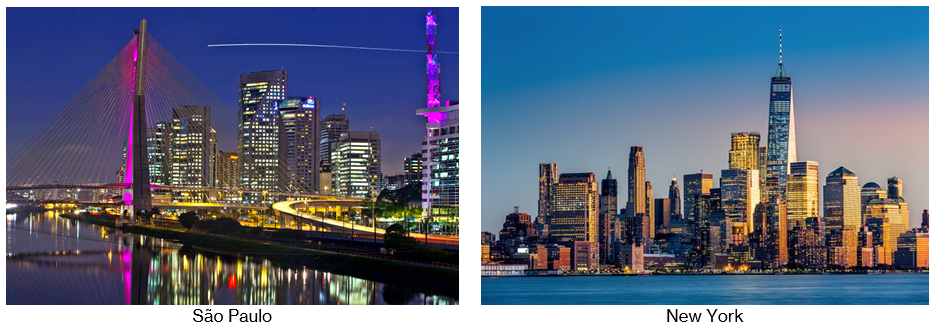
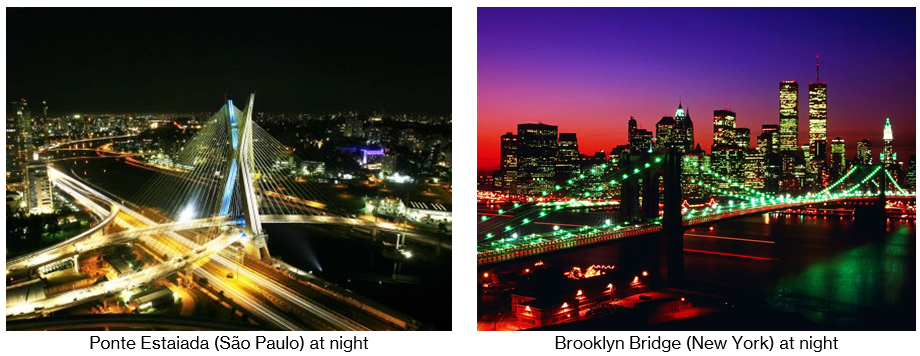
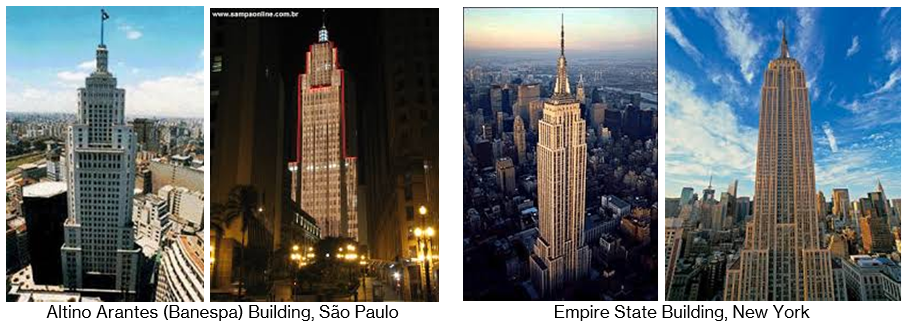
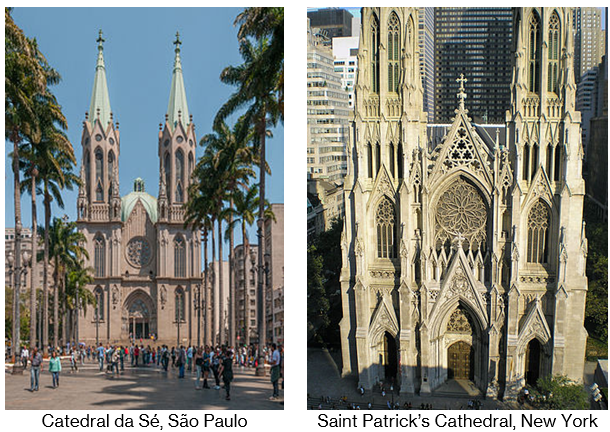
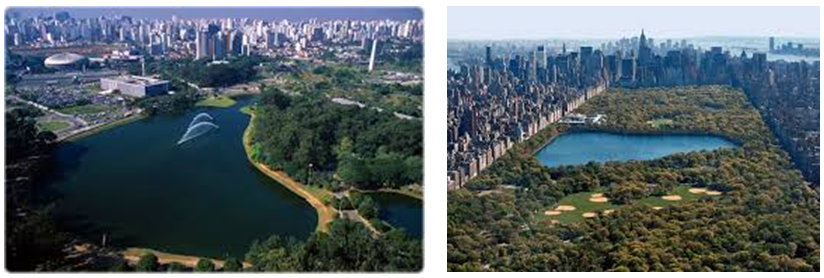
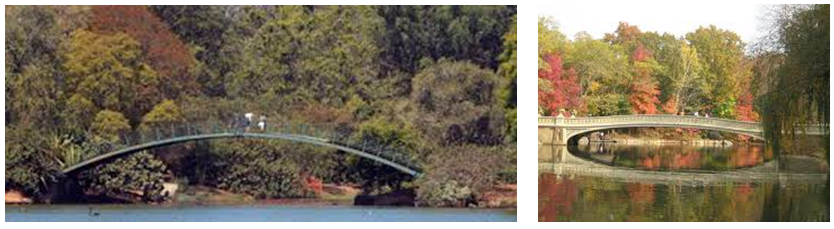
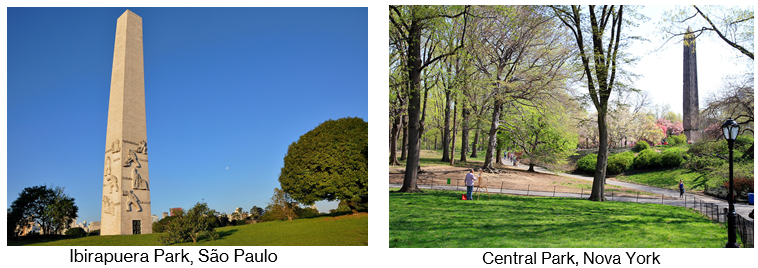
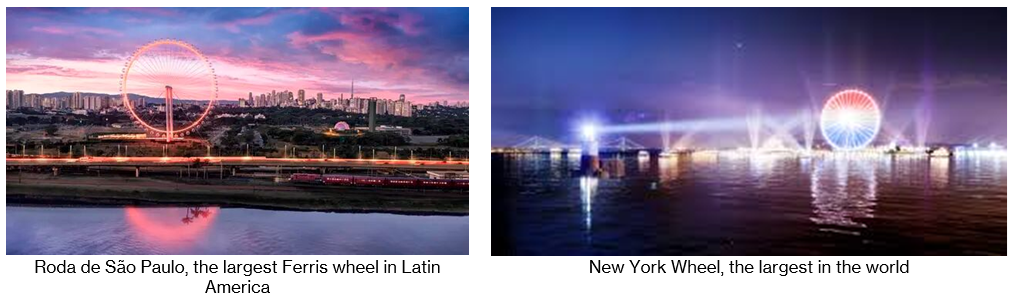
SÃO PAULO (CORAÇÃO DO TEMPO) Só quem não te conhece bem no fundo Só quem não te conhece, ó cidade Universo de luzes e promessas, vitrine de ilusões Dia a dia o sol abre seu farol sobre pedras Teus caminhos cruzados, viajantes de toda direção | A HEART IN NEW YORK New York, to that tall skyline I come, New York, like a scene from all those movies A heart in New York, a rose on the street New York, you got money on your mind |
__________
[1] Rio de Janeiro has three famous beaches: Copacabana, Ipanema and Leblon. Likewise, Los Angeles has the famous beaches of Santa Monica, Venice and Malibu.