
It is time to explain the relation that we are establishing between each Latin “nation” (i.e., state or region) and its Germanic correspondent, as well as between their respective languages. The reason of this correspondence may seem arbitrary at first, but the historical, linguistic evidence, etc., we will present further and in all articles of this portal will make those reasons clearer.
First, it is good to remember that the political divisions are constantly changing (for example, they have changed a lot after the fall of the Berlin Wall). So if we look at the political map of Western Europe today, we will see six exclusively Latin states (we are excluding multiethnic states like Belgium or Switzerland, or microstates like Andorra and Monaco): Portugal, Spain, France, Italy, Romania and Moldova (reminding that it exists as an independent nation just over twenty years). At the same time, we will find eight strict German states: Great Britain, the Netherlands, Germany, Austria, Denmark, Sweden, Norway and Iceland. (Note: ethnic minorities, which exist in almost all countries, are not being considered.) How can there be an exact match between these countries if they are in different number?
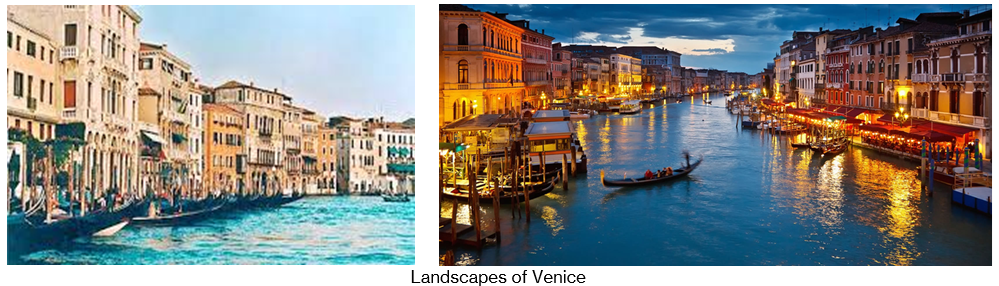
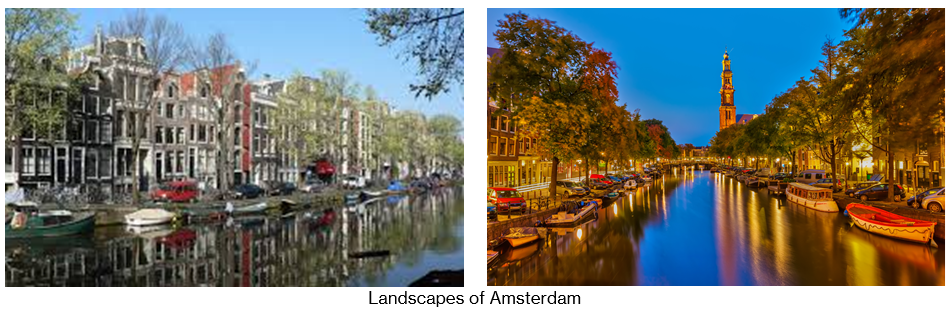
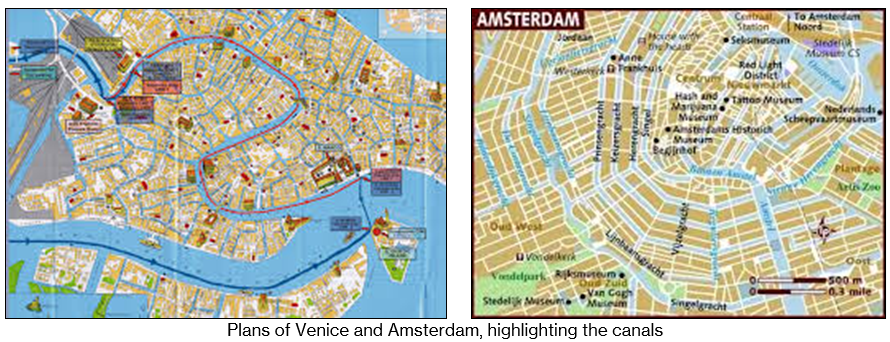
As we said earlier, the supersynchronic correspondence is not between states but between peoples (some of which have possibly formed independent states in the past). For example, there is no Latin “Netherlands”, but there has been. Until 1797, the Most Serene Republic of Venice was an important independent state with its own language, and a marine power that dominated the Mediterranean, especially between the 15th and 17th centuries. Meanwhile, Holland was also an important maritime republic of merchants who dominated the seas at the same time. Both Venice and Amsterdam are towns surrounded by canals, to the extent of the latter being called “Venice of the North”. And both have been built on wooden stilts.
Moreover, the strong separatist movement currently in the Veneto region can, in theory, resurface at any time the Venetian Republic as an independent state.
But what about Denmark, what would its Latin correspondent be? As we can see in Some historical evidences of synchronicity — Iberia and Scandinavia, Romania and Iceland, Denmark corresponds to Catalonia. Today this region is not independent (although it has been at various times in the past and can again be so at any time, given the political climate of the region), but a part of Spain. But until 1905 Norway was part first of Denmark, then Sweden. Another example: from 1949 to 1990 there were two Germanys, West and East; on the other hand, form 962 to 1806 (I Reich, that is, the Holy Empire) and then from 1938 to 1945 (III Reich, the Nazi period) Austria and Germany formed the same state. Meanwhile, a separatist movement wants to create in northern Italy an independent state called Padania.
Thus, what really matters to us is the correspondence between the existing ethnicities in each family and not necessarily the number of states.
That said, the match is the following (non-independent states are in italics):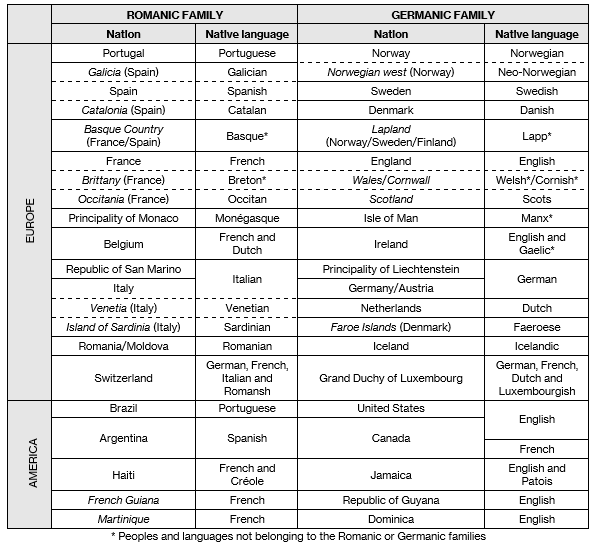
One observation: the Faroe Islands belong to Denmark; the island of Sardinia, although currently belonging to Italy, belonged to Catalonia, Denmark’s mirror nation, until the 18th century. |
These relations between “countries” (independent or not) and languages are detailed in the article Supersynchronicity in languages: standard languages and dialects. My goal here is just to introduce the reader to the matches that will base my work.